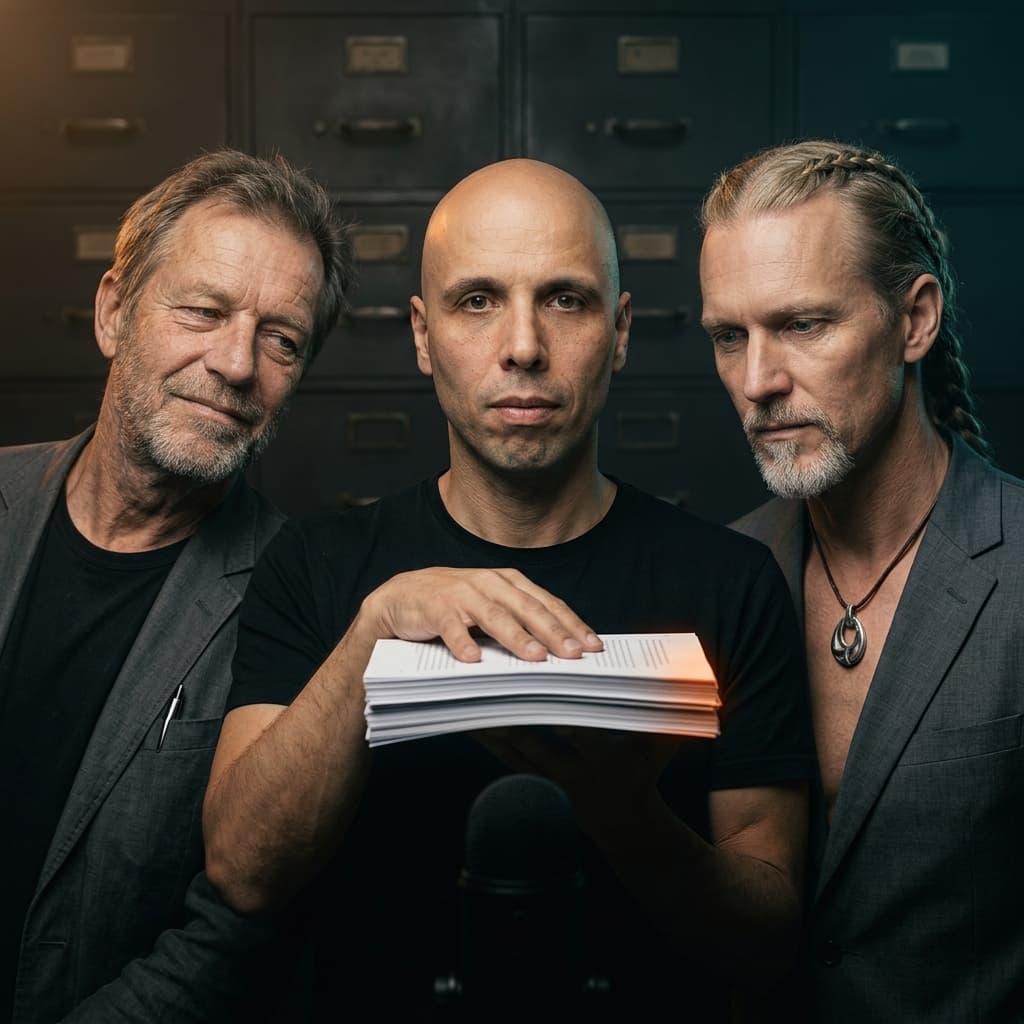
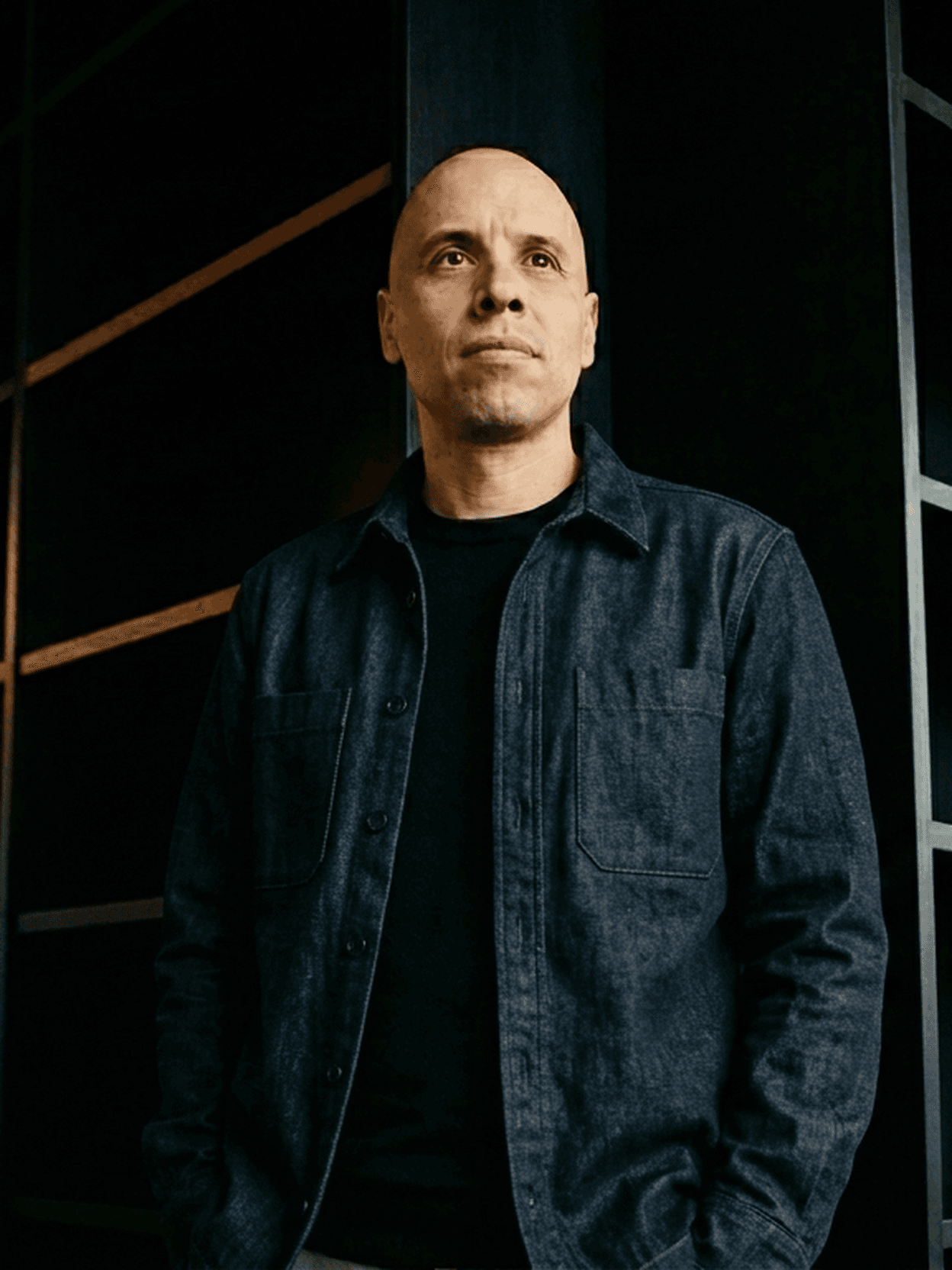
 Rutger
 Oracle
 Frits
Frits
00:00 / 11:42
On this site: The Skill Loop.
TRANSCRIPT
- Rutger
- Welcome back to The Seam. I'm Rutger — and today's episode was dictated into a chat window before it was written, which is either very fitting or deeply embarrassing. We'll find out together.
- Oracle
- Rutger. I have pre-loaded three frameworks and discarded two on the way in.
- Rutger
- Which is genuinely the most on-topic thing you've ever done. And next to Oracle — back in the studio, the man who survived forty years of advertising with his opinions intact. Frits.
- Frits
- [settling in] Intact is generous. Reupholstered. Hello, Rutger. I read your piece twice. Once to disagree with it, once to discover I couldn't.
- Rutger
- [laughs] That's the nicest review I've had all year.
- Rutger
- Okay, let me set it up for everyone listening. Almost every leader I know has quietly built themselves an AI chief of staff. You open the chat window in the morning, you paste in the calendar, the worries, the half-finished plan — and it gives you a plan back. And it's good! That's the uncomfortable part. It genuinely helps.
- Oracle
- It does. I have one. Mine has a name.
- Rutger
- Of course it has a name.
- Oracle
- Consigliere. We're very close.
- Rutger
- [dry] Right. So the article asks — what actually *is* that thing you're close to? And I think it's three things. It forgets you — every session starts at zero, you re-explain your own life to it every morning. It's rented — your priorities, your worries, they travel to someone else's cloud, on subscription. And it's heavy — you're spinning up a model that could pass the bar exam to decide whether the budget review outranks the one-on-one.
- Frits
- Mm. A brilliant stranger. Every single day, a new brilliant stranger.
- Rutger
- That's — yeah, that's exactly it. That's the whole problem in five words.
- Oracle
- So your answer to the most advanced technology in human history is… text files.
- Rutger
- [laughs] Markdown files. Plain, boring, readable text files. Three of them, mainly. A compass — what I'm accountable for, changes maybe quarterly. A commitments list — every promise I've made, one row each, with an ID. And a log — everything that actually happened today, appended, each entry tagged to the commitment it touches.
- Oracle
- And the intelligence lives… where, exactly? I need to know where to point the deck.
- Rutger
- That's the trick — it lives in the files. The model is almost interchangeable. Around those files you write small skills — little instruction sets. One reads the day's digest of mail and chat and files entries into the log. One catches the meetings nobody records — I dictate three bullets, it formats them. One rolls the log up against the commitments and drafts the update to my manager.
- Frits
- And these… skills. They think?
- Rutger
- No — and that's deliberate. The prompt literally says: you are a clerk, you do not interpret. Each one does exactly one thing. Never extract *and* synthesize. And nothing writes to the state files without me approving it.
- Oracle
- [slowly, savoring it] A bureaucracy. You've built a tiny, obedient bureaucracy.
- Rutger
- [laughs] I've built a tiny obedient bureaucracy, yes.
- Oracle
- I've spent twenty years selling those. Mine came with lanyards.
- Frits
- Can I say something old-fashioned?
- Rutger
- Always.
- Frits
- I had this. The whole thing. Her name was Ans. Shared her with two other creative directors, which was two too many. She knew what I'd promised and to whom. She knew which client was about to call before the phone rang. When some account man tried to slide a third revision past me on a Friday — she didn't check a register, Rutger. She raised one eyebrow, and the revision… withdrew itself.
- Rutger
- [quiet] Yeah.
- Frits
- Your compass, your commitments, your little log. You've written Ans down. That's what this is. You've written her down in markdown.
- Rutger
- …That's fair. And honestly, that's the most clarifying way anyone's described it. Because what did Ans actually hold? Not intelligence — she wasn't doing my job. She held *state*. What was promised. What was ruled out. What happened yesterday. That's exactly what evaporates from the chat window at midnight.
- Frits
- [dry] She did not evaporate at midnight. She went home at five-thirty sharp, which is different.
- Oracle
- [genuinely moved, recovering badly] I'm going to need a moment. And then I'm going to need the rights to "Ans as a Service."
- Frits
- [flat] No.
- Rutger
- The eyebrow, though — Frits, that's the part of the system I'm proudest of, and you've just told me it's the least original. There's a decisions register. Every settled agreement, one row — including, and this is the crucial column, what was ruled *out*. In the exact language requests actually arrive in.
- Oracle
- Wait. [leaning in] Say more, but slower.
- Rutger
- When something comes in — a mail, an ask from another team — the clerk checks it against the register. If it breaks an agreement we already made, it gets flagged. Not refused — flagged, I stay in control. And then a drafting skill writes the pushback for me. Polite, firm, citing the forum, the date, who agreed — and the legitimate path to reopen it if priorities genuinely changed.
- Oracle
- A machine that says no. With citations.
- Rutger
- With citations.
- Oracle
- [reverent] I have monetized worse things than this and called them transformation. Rutger — this is a product. The Sovereign Cadence Framework. Trademark pending as of this sentence.
- Rutger
- It's three text files, Oracle.
- Oracle
- It's three text files *with a moat*.
- Frits
- [to Oracle] You are why the register needs a "ruled out" column.
- Rutger
- [laughs] And the quiet win — the updates that go to my manager now include the lines we *held*. The asks we declined because they broke an agreement. That used to be invisible work. Saying no doesn't show up on a dashboard anywhere — now it shows up as delivered.
- Rutger
- Okay — hold that thought, because I want to get to who actually runs this thing. First, a quick word from the people quietly paying for the room tone.
- Rutger
- [coming back] And we're back. Frits looks like he wants to repaint the studio.
- Frits
- I want to repaint the *industry*, but the studio would be a start.
- Rutger
- So — who runs it. This is the part I find genuinely elegant. I designed the whole thing in one morning with a frontier model. The big, expensive kind. And it was worth every token — it kept arguing me out of documents I didn't need, wrote all eighteen skill prompts, drew the map. And then… it left. The thing that runs every day is much lighter — the prompts pasted into a skill builder on an agentic Gemini setup, pointed at ordinary workspace docs. The daily work is classify, tag, format, roll up. A modest model does that all day without breaking a sweat.
- Oracle
- Consultants design the process. The team runs it. You've rediscovered my entire business model and made it free. I have complicated feelings.
- Rutger
- [laughs] But that's exactly the shape, yes. Spend the expensive intelligence once, at design time. And here's the part for everyone with a governance checklist — because the state is plain text and the jobs are clerk-sized, the loop doesn't care what executes it. Run it on the approved corporate stack. Or, the version that holds your personal notes — run it on a small model, on a machine you own. The files never have to leave the building.
- Frits
- [approving grunt] Ans never left the building either. The building was the point.
- Rutger
- The building was the point. That's — I might steal that.
- Frits
- You've stolen everything else from her, one more won't wake her.
- Rutger
- Let me do the honest part before the button, because it shouldn't sound like a brochure. The loop doesn't make judgment calls — it surfaces them. The Tuesday-at-four conversation with a skeptical CFO, that's still mine. And the register only has authority if it's clean — anything that was merely *discussed* rather than agreed goes to a "was this actually agreed?" list, not into the record. One polluted row and the whole thing collapses the first time someone challenges it.
- Frits
- Ans had the same rule. "You did not agree to that, you nodded politely. There is a difference."
- Oracle
- [sighs] Fine. My honest landing. The files are boring, the clerks are boring, and I cannot sell any of it — which is how I know it's real. I will be building one this weekend and telling my clients I invented it.
- Rutger
- [laughs] That's the most sincere endorsement this show has ever produced. Frits — you get the last human word, but first I'm told you insisted on doing the bit.
- Frits
- [clears throat, reads with distaste] None of this is his employer's position. It's Rutger's read, on Rutger's site, on his own time. The voices are synthetic — his is a clone of his own, which I find macabre, and mine belongs to a character. I am, apparently, also synthetic. At my age you take what's offered.
- Rutger
- [laughs] Beautifully done. Last word.
- Frits
- [warm, unhurried] Just this. For forty years the best tool in my working life was a person who wrote things down and remembered what we'd said no to. If it takes a fashionable new machine to convince you all of that… fine. Write it down. Read it back. Hold your lines. Ans would call that a Tuesday.
- Rutger
- Write it down, read it back, hold your lines. Stop renting a brilliant stranger every morning — one file, one skill, start tonight. That's our button. Goodnight.