
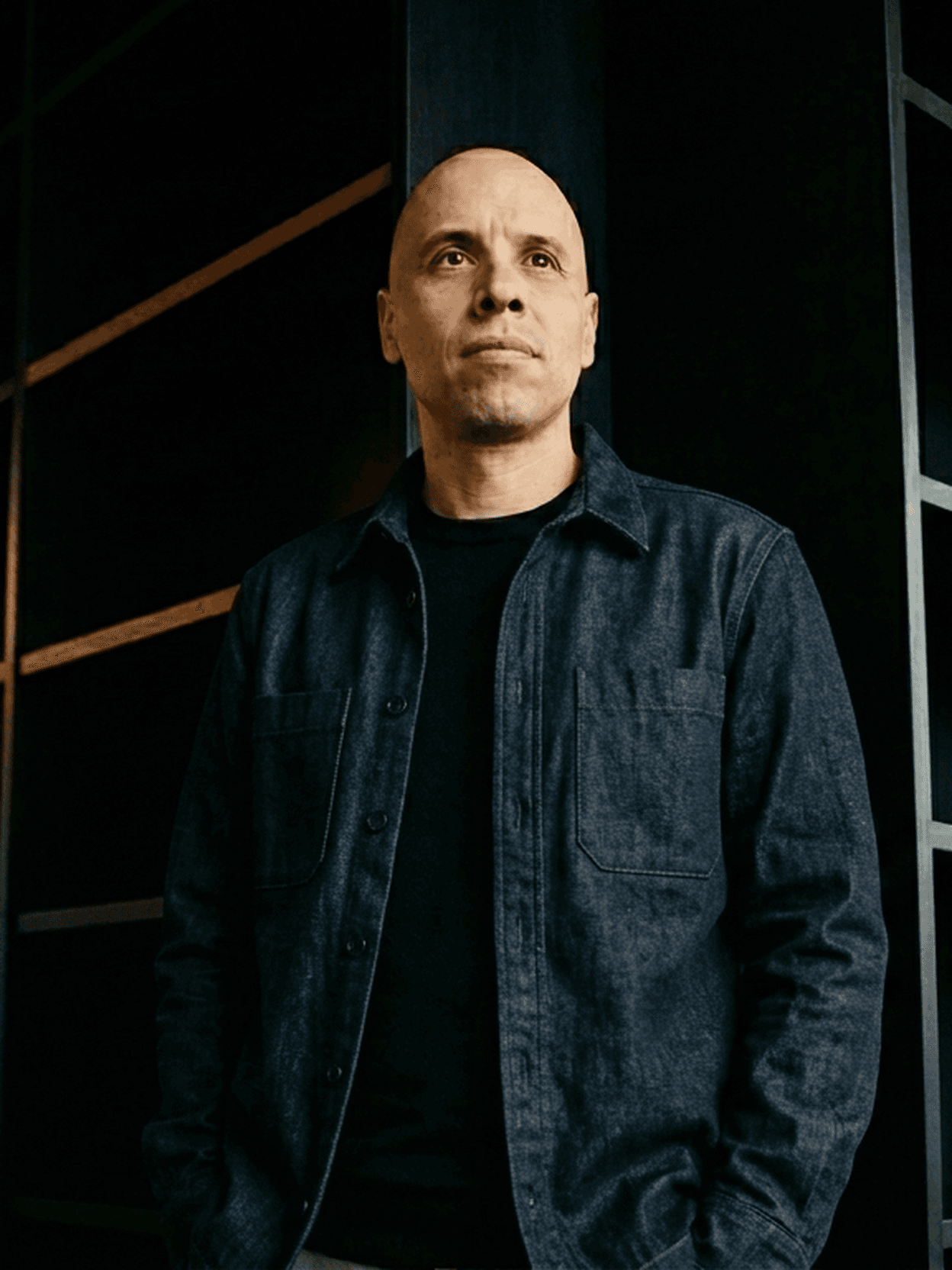
 Rutger
 Dino
Dino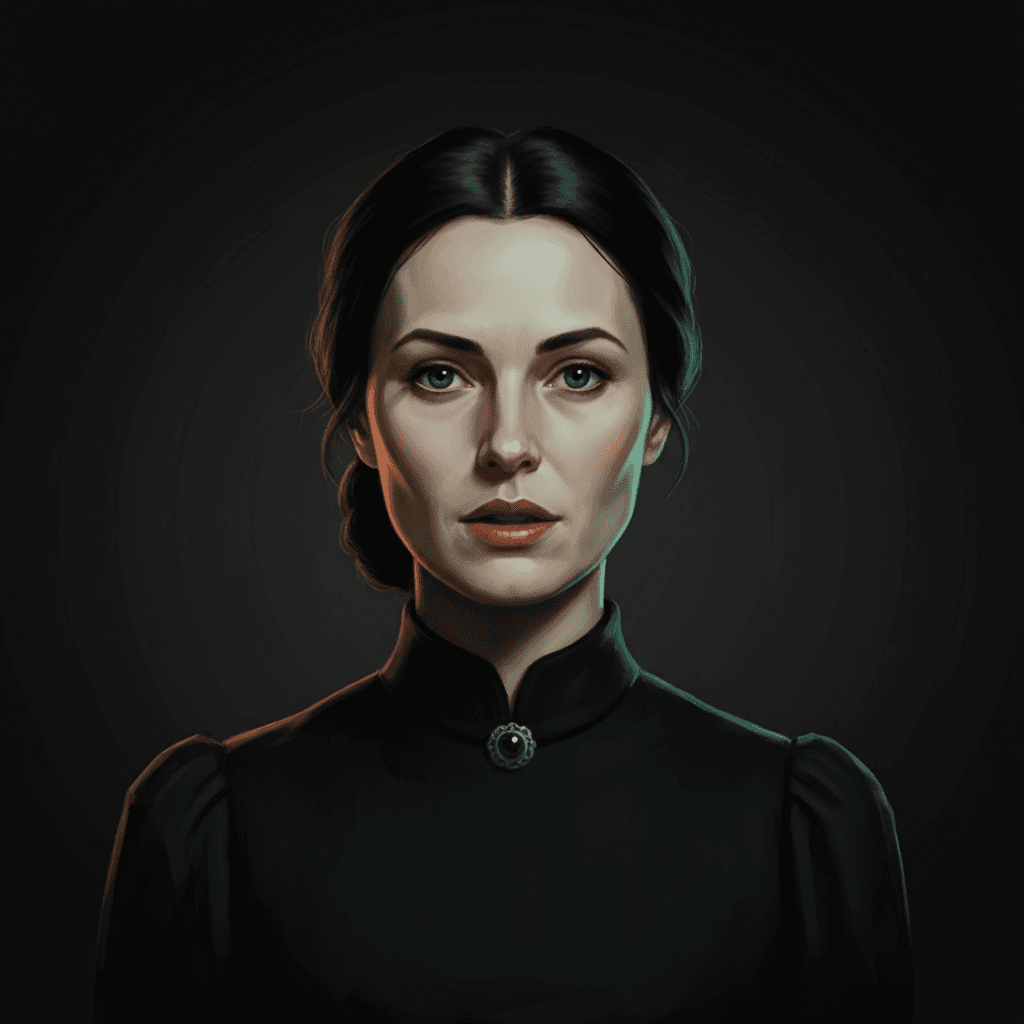 Marie
Marie
00:00 / 11:27
Op deze site: Character Sheet.
TRANSCRIPT
- Rutger
- Back again. I'm Rutger — I dragged everyone here over one line in a piece I wrote. Dino — art director, Rotterdam, pencil older than the studio.
- Dino
- [grunts] The pencil works. That is more than I can say for most of what arrives in this room. Or most of who.
- Rutger
- And Marie, who I bring in when a claim has to actually be true.
- Marie
- Then we'll be busy.
- Rutger
- [laughs] We always are. Right — before the arguing starts.
- Rutger
- Quick setup, in case you haven't read the piece. The whole thing is about one problem — well, one question, really: how do you get an invented person to look like the same person across a hundred AI-generated images. And the answer it lands on is that describing the character in words drifts — the model fills the gaps differently every time — and that, honestly, the fix is reference-conditioning. You stop telling the model who the character is and you start showing it: a small sheet of reference shots it copies from. The sheet becomes the anchor; the prompt does everything else.
- Dino
- [grunts] A long way to say "draw the man first."
- Rutger
- [laughs] Right — and that's where you and I start fighting. Say the objection properly.
- Dino
- The objection is that you have built a complicated machine to do a thing we already did. You want the same face across a hundred pictures? We had a tool for that. A man called an illustrator. You briefed him Monday, he drew the character, and by Friday it looked the same in every panel — because *he remembered what he drew.* No sheet. A skull.
- Rutger
- That's true. It's also one man and one week per character.
- Dino
- One *good* man. The week was the point. The week is where the character became a person.
- Marie
- It also didn't scale.
- Dino
- [grunts] Scale. There it is. The disease.
- Rutger
- Let me walk the methods, because the piece is three ways to do this, and they're not equal. Method one — where most people start — is pure description. You write the prompt. "Forty-year-old man, grey at the temples, broken nose, kind eyes." And you paste that exact paragraph into every generation.
- Dino
- And it works.
- Rutger
- No — it, honestly, it does not work. That's the trap. You get a man who matches the *words* every time and is a different human every time. The temples are grey, sure. But the face underneath drifts. Image one he's Italian, image four he's Swedish, image nine —
- Dino
- — he's nineteen. Yes. I have watched you do this. A different man walks out of the machine every time and you call it the *same* character because the caption matches. That is not consistency. That is a police lineup.
- Rutger
- …That's grim. And right.
- Marie
- Words underdetermine a face.
- Rutger
- Ah — say that again, slower, because that's the whole episode.
- Marie
- A sentence has fewer bits than a face. The model fills the gap differently each time.
- Dino
- …That is annoyingly well put.
- Rutger
- It is. There just isn't enough in a paragraph to pin a person down. So method two — where most teams land — is the seed-and-prompt trick. You lock the random seed, keep the prompt fixed, and nudge. You get closer. Same starting noise, same words, you'll get a family resemblance.
- Dino
- Hah — a family. So now the character has cousins.
- Rutger
- [laughs] That's exactly the failure. You get a family, not a person. Change the pose, change the lighting, the seed stops protecting you. Cousins. Sometimes a brother nobody mentioned.
- Marie
- A seed fixes the noise. Not the identity.
- Rutger
- Right. People think the seed *is* the character. It isn't — it's, well, it's just where the dice landed. [a beat] So method three is the one the piece argues for. You stop describing the character and you start *showing* it. Six shots of the same face, different angles, fed in alongside the prompt. The model conditions on the pictures, not the paragraph.
- Dino
- So you draw the character first.
- Rutger
- …Well — I mean, it's not quite that, you —
- Dino
- [cutting in] You heard me. To make your sheet of six, you need six pictures of a person who does not exist. So *something* has to invent the face before the machine can copy it. [grunts] You've re-invented the illustrator. You just made him slower and took away his opinions.
- Rutger
- [chuckles] That's — honestly, that's half right, and it's the good half. You do — you do generate the initial reference set first. You make the six, choose the keepers, throw out the four where the nose wandered. And that selection… that's the human bit. After that, the references do the work the paragraph couldn't. You're not re-describing the face. You're handing the model the face.
- Marie
- Reference beats description. That part is correct.
- Rutger
- Exactly — that's the one sentence I want people to leave with. Reference-conditioning holds a character together far better than prompt-only description, because you've handed it more bits to copy than any sentence —
- Dino
- Mm — bits. You keep saying bits. A character is not bits. A character is whether he sits too close to the door in a restaurant. None of that is in your six photographs.
- Rutger
- [thoughtful] That's fair — and it's a different point, and… a true one. The sheet isn't the character. It's the *anchor*. Once the face is locked, you, you prompt the behaviour on top. The references hold the noun. The prompt does the verbs — the pose, the room, the thing the hands are doing.
- Dino
- Hm. The noun and the verbs. [a beat] That is *nearly* craft. Don't let it go to your head.
- Marie
- Write that sentence into the piece.
- Rutger
- The anchor sentence?
- Marie
- "The sheet is the anchor. The character is what you do with it." It saves the article.
- Rutger
- [laughs] Cited. You're getting the writing credit again.
- Marie
- I usually do.
- Dino
- She does. It is intolerable.
- Rutger
- Hold that thought — and your grievance, Dino — while I pause us for the people quietly paying for the studio.
- Dino
- [grunts] You can sell anything these days. In my day the product had to be in the room.
- Marie
- It paid for the room.
- Rutger
- [laughs] It did. Okay — here's the part I like, and it's… it's a little uncomfortable, honestly. The cast of this podcast was made exactly this way. Dino — the face you're picturing for yourself right now, the moustache, the horn-rims — that's a reference sheet. We built six of you. Every portrait since has been conditioned on those six.
- Dino
- [long pause] You have a *sheet*. Of me.
- Rutger
- We have a sheet of you.
- Dino
- [grunts] So I am the illustrator's revenge. You drew me once, properly, and now the machine isn't allowed to forget it.
- Rutger
- That's — honestly that's a perfect description of method three.
- Marie
- Mm. Mine too. There is a sheet.
- Rutger
- There's a sheet of everyone.
- Dino
- I want to see mine. I will have notes. The moustache is wrong, I can already feel it.
- Rutger
- [laughs] I'm sure you can. Last thing — Dino, decades of art directing. What's the real failure mode here? Not the technical one. The one teams actually walk into.
- Dino
- [leaning in] Simple. You fall in love with the sheet and you stop casting. Two weekends building your perfect consistent man, you bond with him — and now he's in the bank commercial *and* the pension commercial *and* the insurance commercial, because you already paid for him. The audience notices before you do. Congratulations. Your agency now owns three faces. Three. Forever. He'll outlive you.
- Rutger
- [laughs] That's a real one. That's the stock-photography problem coming back around.
- Dino
- It is *exactly* stock photography. We were annoyed about that for ten years, then we learned to use it properly. We'll do the same here. Reluctantly.
- Marie
- Timeline?
- Dino
- Twelve years.
- Marie
- Oddly specific.
- Dino
- I have been doing this a long time.
- Rutger
- [laughs] So — to land it. Three methods. Description drifts; the words don't carry enough of the face. Seed-and-prompt gets you a family, not a person. Reference-conditioning is the one that holds — you show the model the face instead of describing it, and the sheet becomes the anchor everything else hangs on. Build the six, choose the keepers, then prompt the behaviour on top.
- Dino
- And keep a pencil. For when the machine forgets who it is.
- Rutger
- Keep a pencil. For the record — none of this is a Google position, it's my read, on my own site, and the two voices arguing with me are synthetic, built from reference sheets, exactly like the article describes. Dino?
- Dino
- [grunts] I still say we should have drawn it ourselves. But it's the right idea. Badly named.
- Marie
- It is correctly named. Move on.
- Dino
- …A perfect answer. I hate it.
- Rutger
- [laughs] That's our button. Show the face, don't just describe it. Build the anchor once, prompt the person on top. Goodnight.