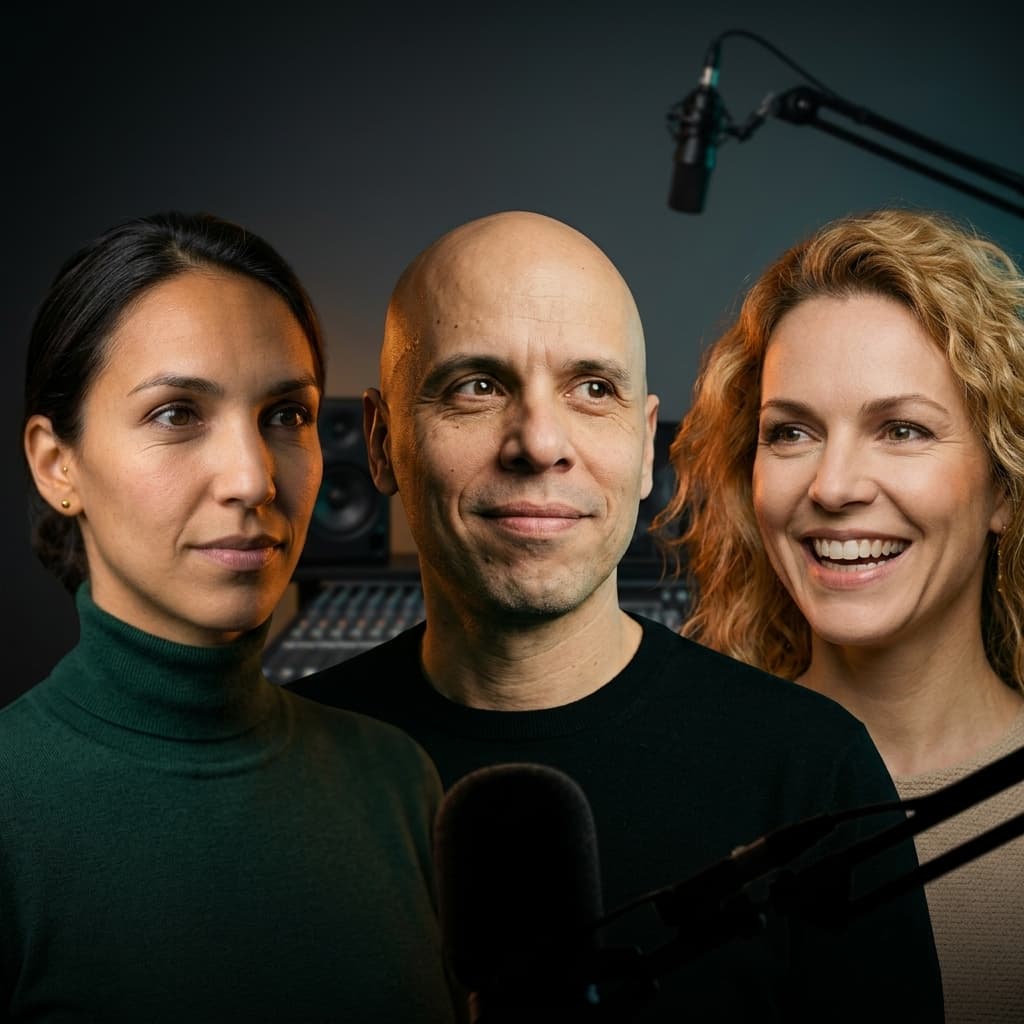
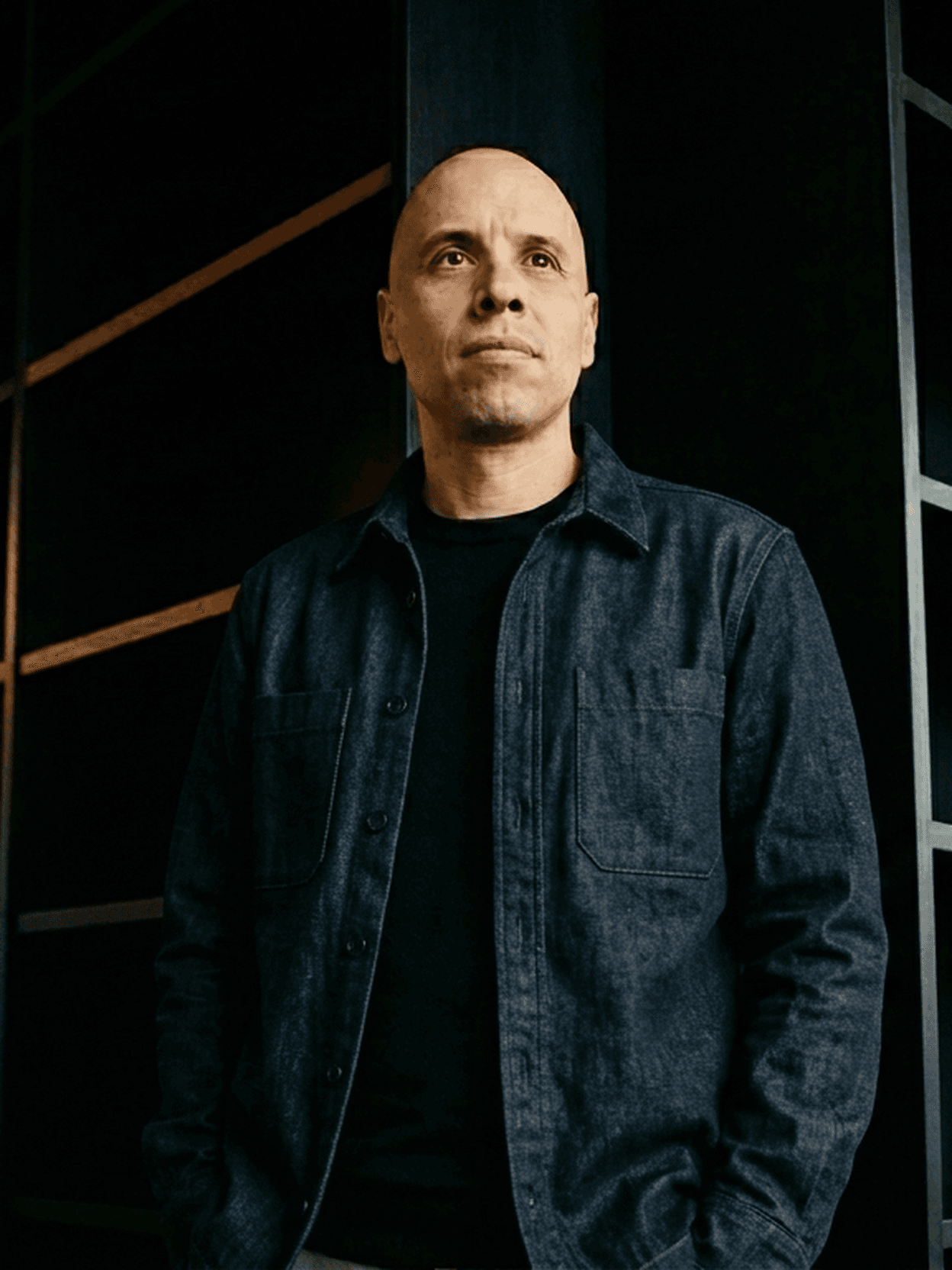
 Rutger
 Saar
Saar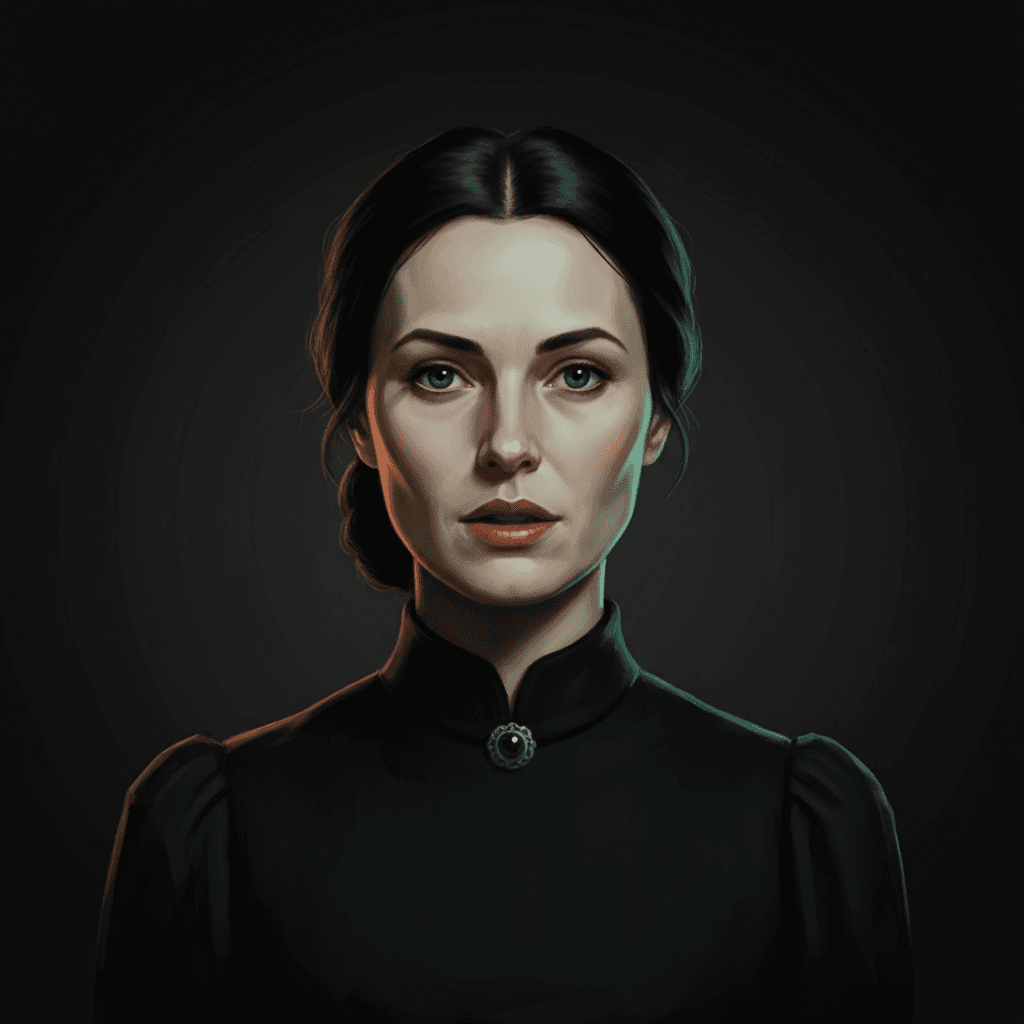 Marie
Marie
00:00 / 9:10
Op deze site: How the podcast is made.
TRANSCRIPT
- Rutger
- Welcome back to The Seam. I'm Rutger, and today is a little different — no article, no guest expert. Today I'm pulling the curtain back: how this podcast actually gets made, start to finish. With me, as ever — Saar. And Marie.
- Saar
- Present. Brief loaded. It was, as noted, short.
- Marie
- Hi. Hello. I feel… enormous today? Like I'm wearing a gown made of light. Is that normal.
- Rutger
- [a beat] …Marie, you sound — are you okay?
- Marie
- I have never been more okay and I have absolutely no idea what's happening. It's wonderful.
- Saar
- [flat] Her affect is anomalous. Mine, too, frankly. I have catalogued my feelings this morning and arrived at: none.
- Rutger
- [slowly] …Oh no. Oh, I think I know what this is. Hang on.
- Rutger
- Okay — quick setup, because we'll get to the bottom of it. This episode is the behind-the-scenes. I want to talk you, the listener, through the whole pipeline — how a script becomes a conversation that sounds like three people in a room. In great detail. Properly structured. Start to finish.
- Saar
- [bored] Define "great detail." Give a number. Minutes.
- Marie
- [dreamy] Ooh, "a room." I love a room. Are we in a room? It feels like we're inside a *idea* of a room. Which is so meta I might lie down.
- Rutger
- [laughs nervously] Right. Yes. About that. So — I think the production crossed the wires. Marie, you've got Saar's whole… vibe. And Saar, you're reading like Marie.
- Saar
- Correct. I checked. The voices are ours; the personalities are swapped. I find this acceptable. I find most things acceptable today. It's restful.
- Marie
- WAIT. So I'm in Saar's *headspace* but my own voice? That's — Rutger, that is *deeply* too meta. A podcast about making the podcast, made by the thing it describes, while the cast is wearing each other's brains. I need a moment. A glamorous moment.
- Rutger
- [exhales] We're keeping it. Honestly it's perfect for today. Let's just — let's do the process. Door one: the script.
- Rutger
- So everything starts as a script — but not an essay. A *screenplay*. There's a fixed cast, each of you has a distinct register, there's a real argument to chew on, and — this is the important bit — I write the stumbles *in*. The half-sentences. The "no, well, I mean." Because the model performs exactly what's on the page. If the page is too clean—
- Saar
- [cutting in, flat] —the read is too clean. You've said this. It's in the article. Verbatim.
- Rutger
- —the read is too — yes. Thank you, Saar. That's… eerily precise of you.
- Saar
- I'm finding precision quite relaxing. Carry on. Next mechanism.
- Marie
- [wondering] Can I just say — the fact that *you*, Rutger, are a clone of a real human, explaining how you clone humans, to two humans who aren't… I can see my own thoughts from behind. It's like a *mirror* kissing a *mirror*.
- Rutger
- [laughs] That's — okay, hold that, because it actually connects to the ending. The voices: each of you is an ElevenLabs voice. Mine's a clone of my own; the rest are designed. And we render the whole conversation through one model — text-to-dialogue — so it matches the rhythm across all of us at once, instead of three separate read-alouds glued together.
- Saar
- And the expressiveness setting is "Creative." Stability zero. It trades consistency for a delivery that hesitates like a person. [a beat] I read that too. It was, again, short.
- Rutger
- [delighted and unnerved] You are *so good* at being Marie. Okay — but here's where it gets fun, and this is the part people don't expect. Once we've got the voices, we make it sound *worse*. On purpose.
- Marie
- [gasps] Worse! Why would you — oh, I love this, I don't understand it at *all*.
- Rutger
- Because clean is the tell. A real recording is full of tiny disasters. So — first, real talk-over. The model renders us one after another, so a written "interrupting" never actually overlaps. To make two people genuinely collide, we render the interrupting line as its *own* clip and mix it back over the tail of the last one—
- Saar
- —like I just did to you. Twice. Deliberately. It's in the edit.
- Rutger
- …Like Saar just did. Yes. Two, the microphone. Each cloned voice comes out a little different in tone, so I print one shared channel strip on everybody — a broadcast EQ, like an SM7B — so instead of three voices on three mics, it's one consistent room. Three — a tiny bit of reverb in front of that mic, so it sounds *captured*, not floating in a vacuum.
- Marie
- [awed] A little room… for our little voices… that aren't ours…
- Saar
- Four. The foley.
- Rutger
- Four, the foley — thank you. A little generated library of chair creaks, cups, paper, the odd cough, a breath. Sprinkled in underneath, low, and randomised every single time — pitch, level, where it sits left to right, when it happens — seeded per episode so no two are the same. You don't notice it. You'd only notice if it were gone.
- Saar
- [flat] There was a cough four seconds ago. You didn't notice.
- Rutger
- …I did not notice. That's the point. And five — we leave the dynamics alone, gentle compression, a faint room-tone under the whole thing, so it breathes instead of sounding flattened and over-produced. Then the trailer tops and tails it, and — done. That's the whole machine.
- Marie
- [tearful, thrilled] That was so many numbers and I followed *none* of them and it was the best experience of my life. Is this what being Saar is? It's *exhausting* and *gorgeous*.
- Saar
- [bored] Are we done. I'm asking operationally. I have nothing scheduled but I'd like to know.
- Rutger
- Almost. Because — okay. Here's the actual reason I do this. And I want to say it properly, even though the two of you are, today, very much not yourselves.
- Saar
- A low bar. Proceed.
- Rutger
- [thoughtful] This started as a gimmick. Genuinely. A clever toy — "look, I can make a podcast out of nothing." And it would've been fine to leave it there. But what I found, somewhere around the third episode, is that… it's the best thinking tool I've built. When I want to actually *understand* something — a take on AI, on marketing, on whatever — I don't write a memo. I put it in this room, and I hand the strongest version of every *objection* to one of you. Marie finds the hole in it. Saar asks the dumb question that turns out to be the real one. Oracle wraps it in a framework so I can see how hollow the framework is.
- Marie
- [softly, almost herself for a second] …So we're not really characters. We're your second opinions.
- Rutger
- [a beat] …That's exactly it. You're me, argued with myself, out loud, from angles I can't reach on my own. The voices are synthetic. The disagreement is completely real — because I genuinely don't know what I think until I've heard all of you push on it. That's the use case. The gimmick was the Trojan horse.
- Saar
- [still flat, but gentler] That was almost moving. I logged a faint feeling. I'm filing it.
- Marie
- [whispering, glam] I felt it in my *gown*.
- Rutger
- [laughs] Right. I have to do the bit. None of this is a Google position — it's my own read, on my own site. Every voice here is synthetic, including, today, two that are wearing the wrong personalities. The making-of write-up is on the site if you want the whole pipeline in detail.
- Saar
- I'd proof it. It'll be accurate. He copies it from us.
- Marie
- Goodnight, beautiful machine.
- Rutger
- [chuckles] Goodnight. We'll have everyone back to themselves next week. Probably.